Mechanics Monument Plaza Sundial
SUNNY HOURS TODAY
Drag the sun around the dial, use the slider, or press play to move through the day.
Reading the dial. You're looking at a horizontal sundial set for the plaza's exact location, 37.79° N, 122.40° W. Its gnomon, the upright blade, rises at 37.8°, the plaza's latitude, and points north, with morning hours on the left and afternoon hours on the right. Brass-lit wedges represent the times at which the sun reaches the plaza.
How the sun is calculated. The sun's position comes from the NOAA solar equations for the monument's exact spot, adjusted for daylight saving time. About 65 nearby towers are modeled as boxes from their published heights and locations. For each two minutes of the day, a line is traced from a seated person's eye level at the monument toward the sun. If it passes below a rooftop, that moment is shade. Checked against observations in the plaza, the times are good to within a few minutes. They assume a clear sky. On days with clouds or fog in the forecast, fog drifts over the dial, a patina arc marks the cloudy hours, and each sunny window lists its forecast (from Open-Meteo).
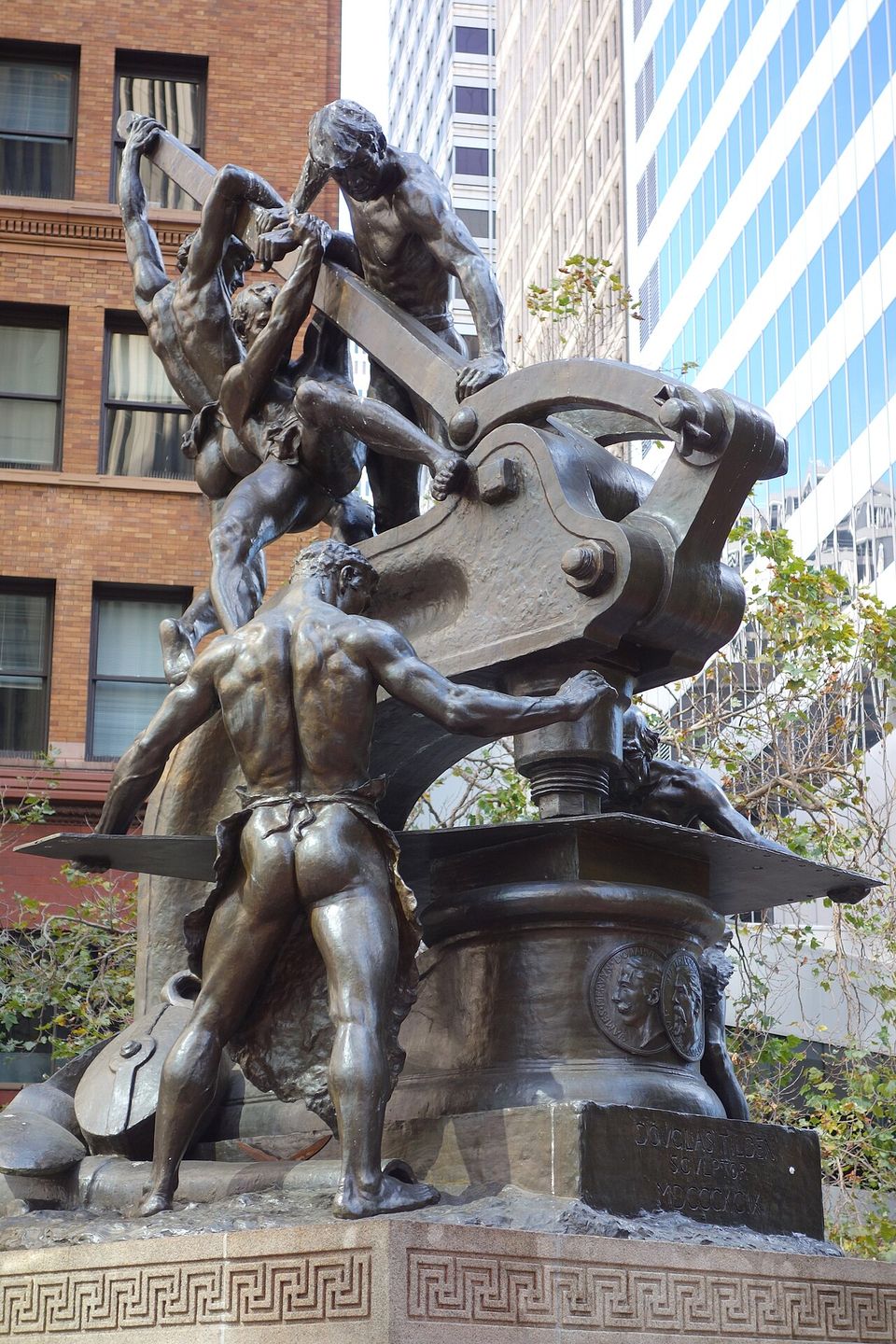
Why a sundial. The Mechanics Monument dates from 1901, when San Francisco borrowed the forms of Greece and Rome for its public spaces. The sundial belongs to that classical tradition, along with the Roman capitals and the Greek key on the monument's granite base. The sundial also suits the monument's subject. Douglas Tilden's sculpture honors the city's mechanics, people who made and ran machines, and the sundial is one of the oldest precision instruments, a working device made from geometry and the sun. Today the plaza, busy again at lunchtime, is a small sign of downtown San Francisco's recovery, and the sundial's motto fits that too: Sol novus cotidie, “the sun is new each day,” a line from Heraclitus and the kind of inscription sundials of that era often carried.